Bachelor's Degree in Theology
with an emphasis on Pastoral
Synodal
Starts May 11, 2026
A novel offering inspired by synodality
The Bachelor's Degree in Synodal Pastoral Theology is a pioneering program that responds to the current challenges of strengthening or promoting a constitutively synodal Latin American and Caribbean Church, training pastoral theologians capable of accompanying socio-pastoral processes from an authentic spirituality of communion, participation and mission.
Its academic proposal integrates rigorous academic study, community discernment, and collaborative and transformative pastoral practice, with an approach fully inspired by the synodal path of the entire Church promoted by Pope Francis and continued today with Pope Leo XIV.
Our Bachelor's degree combines in-depth theological and pastoral study, analysis of continental and global realities, methodological competencies, and shared pastoral leadership skills, working with a synodal perspective as a cross-cutting theme throughout all its courses and seminars. Therefore, the program's methodological approach integrates the ongoing practice of conversation in the Spirit with the guidance of facilitators. In this way, we aim to prepare pastoral leaders capable of guiding communities and ecclesial structures with an authentically synodal approach.
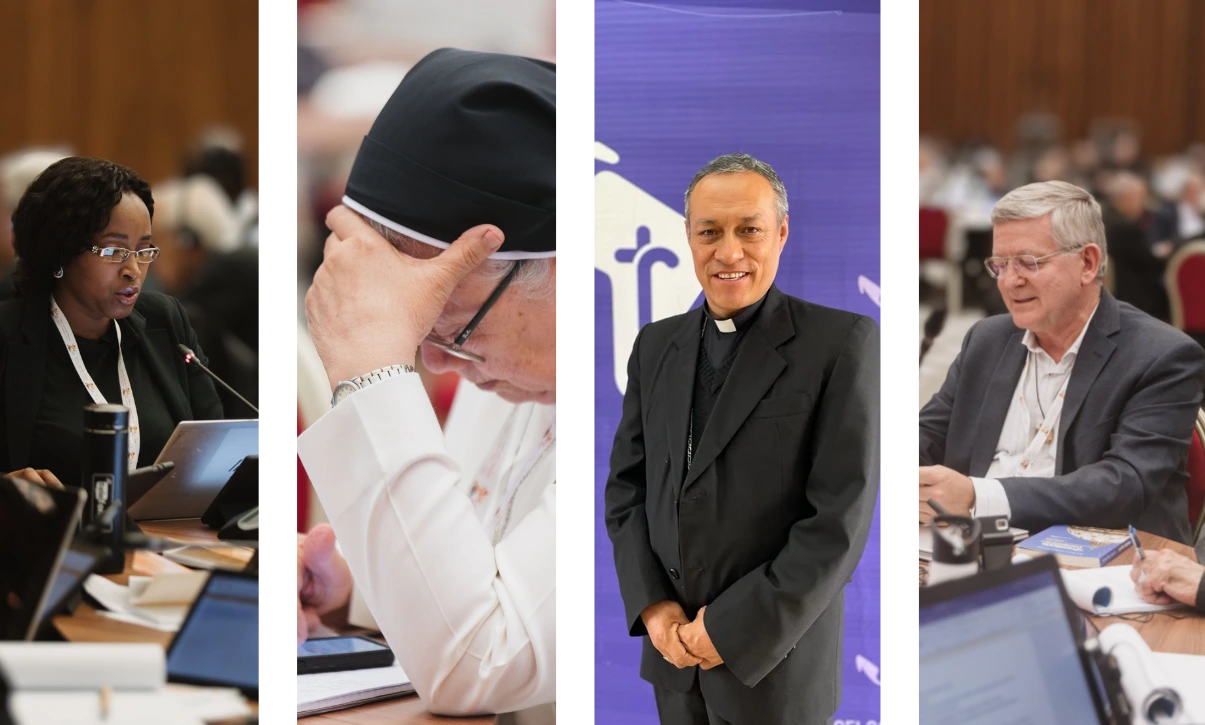
The Bachelor's Degree in Synodal Pastoral Theology is offered in collaboration with the Pontifical Bolivarian University (UPB), in a hybrid modality —in-person and virtual—, allowing each student to progress at their own pace and according to their time availability.

Modality and certification
The in-person module, which lasts one month, takes place at the facilities of the Latin American and Caribbean Episcopal Council (CELAM) in Bogotá, Colombia. The online modules are delivered through the digital platform of CELAM's CEBITEPAL Theological Center.

What does this program offer?

A critical and faith-based view of reality
Block I introduces the student to fundamental pastoral theology in a synodal key and the believer's reading of contemporary social contexts, especially in Latin America, taking into account the pastoral challenge of the growing urban realities, along with the new subjects and emerging practices in our society. Along with this, a solid methodological framework is offered to carry out pastoral diagnostics that allow understanding the signs of the times that challenge and encourage us with clarity and prophecy.

A theological-pastoral hermeneutics for a synodal Church
Block II delves into the foundations of a synodal ecclesiology that develops and matures the model of the Church as the People of God, one of the great legacies of the Second Vatican Council and key to understanding its reception in Latin America and the Caribbean. It also offers a Christology inspired by the following of Jesus and a pneumatology that recovers the relationship between ministries and charisms in a synodal Church. Finally, it provides training in the hermeneutical techniques necessary to interpret the life of the Church and the world in our time from the communal experience of listening and discernment, capable of inspiring shared decision-making processes in light of the practice of the sensus fidei.

Collaborative design of pastoral proposals in a synodal key
Block III trains students to develop bold and contextualized pastoral responses. Topics such as social pastoral care, the option for the poor, liturgical-celebratory pastoral care, and spirituality, along with synodal pastoral planning, allow for the articulation of relevant and transformative projects.

Leadership for shared mission and ecclesial transformation
Block VI focuses on strengthening the management, leadership, and pastoral structure competencies necessary to animate real synodal processes in communities. Additionally, it delves into the Announcement and missionary synodality, and offers methodological support for the development of the final thesis, an expression of the comprehensive formative process that is intended to be provided.
Who is it aimed at?
The Bachelor's degree is aimed at all the People of God, especially pastoral agents, religious men and women, priests, committed laywomen and laymen, educators, community animators, and professionals who have previously completed theological training and are linked to ecclesial spaces that seek to understand and lead the mission of the Church in a synodal key.
The program aims to train people who work pastorally in Latin America and the Caribbean, as well as in other regions and continents with individuals interested in knowing and applying a synodal pastoral theology in their various contexts and local Churches, with the novelty of the transversal development of synodality.
It is an essential requirement to have undergraduate training in theology.
Study curriculum
- Fundamental pastoral theology in a synodal key
- Urban pastoral in a synodal church
- Method I: Methodological overview and pastoral diagnosis
- Ecclesiology and synodality
- Pneumatological Christology
- Method II: Biblical and pastoral hermeneutical approaches
- Social pastoral and walking with the poor
- Pastoral of spirituality and community celebrations in a synodal church
- Method III: Pastoral planning in a synodal key
- Synodal animation of the Christian community
- Pastoral of announcement and missionary synodality
- Method IV: Preparation and final writing of thesis
Hybrid format: face-to-face and online courses
- Fundamental Pastoral Theology in a Synodal Key
- Method I: Methodological overview and pastoral diagnosis
- Synodal Animation of the Christian Community
- Pastoral of Spirituality and Community Celebration in a synodal church
In addition, there is a seminar dedicated to guidelines for writing a thesis, which also includes the practice of Conversation in the Spirit.
Other subjects are taken online throughout the two years of the program.
- Social Pastoral and journey with the poor
- Pastoral of announcement and missionary synodality
- Urban Pastoral in a synodal Church
- Ecclesiology and synodality
- Pneumatological Christology
- Methodology seminars
Semester curriculum
Program cost
The canonical Licentiate is organized into four academic semesters, comprised of courses, seminars, and the writing of a thesis. Upon completion of the program, the student will have earned 55 credits.
The program cost is calculated per course or seminar, allowing students to clearly, progressively, and transparently plan their learning path. The complete program costs USD 3,360 and can be financed over its duration. The semester cost, calculated based on the number of credits, is as follows:
Payment methods and monthly installments
In order to facilitate access to the program, CEBITEPAL offers payment options in monthly installments for each semester, distributed between one and five installments, depending on the chosen option. The choice of payment modality is made at the time of registration for each semester and is maintained during the corresponding academic period. Below are the financing options for each semester:
Cost of the administrative processes of the Pontifical Bolivarian University (UPB) for obtaining the canonical degree:
The costs corresponding to admission, tutor, jurors, and graduation fees, established by the Pontifical Bolivarian University (UPB), amount to USD 972 and are paid independently of the academic cost of the Bachelor's degree.
What do you need to know to pursue the Canonical Bachelor's Degree in Pastoral Theology?
The requirements are:
- Having obtained the degree of Bachelor in Theology (Baccalaureatum). Or, alternatively, present the De Universa exam in Theology.
- Present a valid identity document (ID card, DNI, or passport).
- Present a brief text explaining the reasons why you wish to deepen your studies in this area.
- Identity document (DNI – Citizenship ID or valid Passport).
- Certificate of theological studies completed and approved in seminary or university.
- If you completed your studies at a university, attach the degree certificate and diploma of the obtained title.
- Recent photograph facing forward and on a white background.
- A brief presentation of yourself in which you explain the reasons why you are interested in the academic program of the Canonical Bachelor's Degree in Synodal Pastoral Theology that you wish to study.
The requirements must be sent in PDF before starting the enrollment process to the email: cebitepal.edu@celam.org
The program includes a single month in person, which begins the first semester. The other semesters are conducted online.
No. The cost of the degree only covers academic training. The expenses for food and accommodation in Bogotá are not included. However, CELAM has a space with accommodation and meal services, the cost of which must be paid separately.
The in-person month includes the start of the first four subjects of the Bachelor's Degree. Classes will be held from Monday to Friday. In addition to classes, students will participate in group work and conversations in the Spirit incorporating the synodal method into theological work.
No admission exam is required. However, in the case of priests or religious, it is necessary to present a letter of recommendation from their diocese or congregation, in addition to a personal document explaining the motivations for pursuing these studies.
No. In addition to Bogotá, there will also be an in-person space at the Archdiocese of San Salvador. In this place, classes will be followed synchronously via Zoom and the group will be accompanied by a teacher-facilitator. In-person attendance is mandatory during the month.
Contact us
To learn about the study modalities, the current course offerings, and the costs, contact us: cebitepal.edu@celam.org